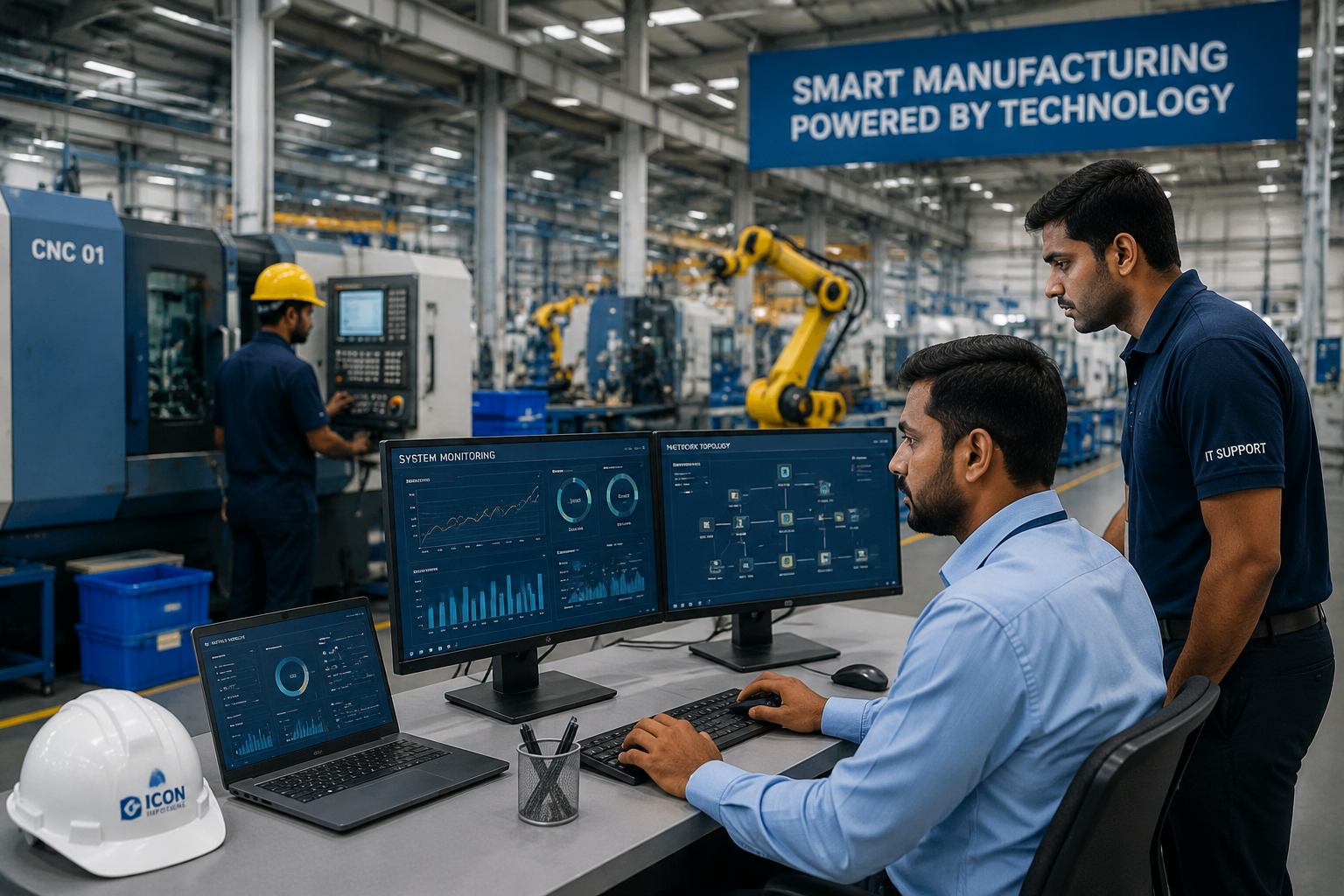
Managed IT Services for Manufacturing Businesses
Modern industrial landscapes in India are evolving at a rapid pace. To stay ahead, firms must embrace digital transformation to maintain a competitive edge in a global market. Implementing a Managed IT Services for Manufacturing Company strategy is no longer optional; it is a vital necessity for long-term success.
Efficiency and precision define the heartbeat of today’s production lines. By integrating robust digital frameworks, businesses can streamline complex operations and reduce costly downtime. These advanced solutions empower teams to focus on core production goals while experts handle the technical infrastructure.
Adopting a professional Managed IT Services for Manufacturing Company approach ensures that your data remains secure and your systems stay operational. Investing in reliable technology today builds the foundation for a smarter, more resilient industrial future across the nation.
Key Takeaways
- Digital transformation is essential for maintaining competitiveness in the Indian industrial sector.
- Outsourcing technical support helps streamline daily operations and improves overall output.
- Robust digital frameworks are critical for minimizing unexpected system downtime.
- Expert technical management allows internal teams to prioritize core production objectives.
- Enhanced security protocols protect sensitive industrial data from emerging cyber threats.
The Strategic Importance of Managed IT Services for Manufacturing Company Success
In the competitive landscape of Indian manufacturing, technology is no longer just a support function but a core driver of growth. Companies that leverage a Managed IT Services for Manufacturing Company approach often find themselves better equipped to handle the complexities of modern production. By integrating digital tools with physical workflows, businesses can achieve higher levels of efficiency and precision.
Aligning Technology with Production Goals
Successful industrial firms ensure that their IT strategy mirrors their long-term production targets. When technology is perfectly synced with operational goals, companies can streamline their supply chains and improve output quality. Professional it support for manufacturing helps leadership teams focus on core competencies while ensuring the digital backbone remains robust.
Strategic alignment involves several key areas that directly impact the bottom line:
- Real-time monitoring of production metrics to ensure targets are met.
- Integration of ERP systems to manage inventory and resource allocation.
- Customized software solutions that cater to specific factory floor requirements.
Reducing Unplanned Downtime in Factory Floors
Unplanned downtime is perhaps the greatest enemy of productivity in any industrial setting. Even a few hours of system failure can lead to significant financial losses and missed delivery deadlines. Reliable manufacturing managed services provide the proactive monitoring necessary to identify potential hardware or software issues before they escalate into full-scale outages.
By utilizing predictive maintenance and regular system health checks, IT teams can ensure that critical machinery stays operational. This level of it support for manufacturing is essential for maintaining a continuous flow of production in high-demand environments. When systems are stable, workers can focus on their tasks without the constant threat of technical interruptions.
Scalability for Growing Industrial Operations
As businesses expand their footprint, their IT infrastructure must grow alongside them. Whether opening a new facility in Pune or upgrading existing lines in Pimpri Chinchwad, scalability is vital for long-term success. Manufacturing managed services offer the flexibility to add new users, devices, and cloud resources without disrupting ongoing operations.
Choosing a scalable Managed IT Services for Manufacturing Company partner ensures that your technology stack remains agile. This adaptability allows firms to pivot quickly when market demands change or when new technologies emerge. Ultimately, a scalable IT framework acts as a catalyst for sustainable industrial growth.
Core Components of Modern Manufacturing IT Solutions
Manufacturing IT solutions serve as the critical bridge between traditional hardware and the future of smart production. By integrating advanced digital frameworks, industrial facilities can achieve unprecedented levels of efficiency and operational control. Modernizing your infrastructure is no longer optional; it is a necessity for survival.
Network Infrastructure and Connectivity
A stable network is the lifeblood of any factory floor. Without reliable connectivity, even the most advanced machinery cannot communicate effectively with management systems.
High-Speed Industrial Wi-Fi Implementation
Deploying high-speed industrial Wi-Fi allows for real-time data transmission across vast shop floors. This connectivity ensures that sensors and automated systems remain synchronized at all times.
Secure Remote Access for Distributed Teams
Modern manufacturing technology solutions must support remote oversight without compromising safety. Secure tunnels and multi-factor authentication allow engineers to monitor production lines from anywhere in India.
Cybersecurity Protocols for Industrial Control Systems
As factories become more connected, the attack surface for malicious actors grows significantly. Implementing robust manufacturing it services is essential to defend against evolving digital threats.
Protecting Proprietary Manufacturing Data
Your intellectual property is your greatest asset. Encryption and strict access controls ensure that sensitive blueprints and production formulas remain confidential.
Mitigating Ransomware Risks in Production Environments
Ransomware can halt production for days, leading to massive financial losses. Proactive monitoring and regular backups are the best defense against these disruptions.
“In the age of Industry 4.0, cybersecurity is not just an IT concern; it is a fundamental pillar of operational continuity.”
Cloud Integration for Supply Chain Management
Cloud platforms provide the visibility needed to manage complex supply chains effectively. By centralizing data, businesses can respond to market shifts with agility.
- Real-time inventory tracking across multiple warehouse locations.
- Seamless collaboration between suppliers and production teams.
- Scalable storage for massive amounts of sensor data.
| Feature | Traditional IT | Modern IT Solutions |
|---|---|---|
| Connectivity | Wired Only | High-Speed Industrial Wi-Fi |
| Data Storage | On-Premise Servers | Hybrid Cloud Integration |
| Security | Basic Firewalls | Advanced Threat Mitigation |
Investing in comprehensive manufacturing it services ensures that your facility remains resilient. By adopting these manufacturing technology solutions, you position your company for long-term growth and stability in a competitive market.
Overcoming Operational Challenges with Managed Services
Modern manufacturing facilities often struggle with the disconnect between digital systems and physical machinery. By implementing robust manufacturing IT services, companies can harmonize their digital infrastructure with shop-floor requirements. This integration ensures that data flows seamlessly across the entire organization.
Bridging the Gap Between IT and OT
The traditional divide between Information Technology (IT) and Operational Technology (OT) often leads to communication silos. Effective management requires a unified strategy that treats both domains as a single ecosystem. This approach minimizes downtime and improves overall production reliability.
Automating Routine Maintenance Tasks
Manual maintenance scheduling is prone to human error and inefficiency. By utilizing advanced manufacturing technology solutions, teams can automate routine checks and updates. This shift allows staff to focus on high-value tasks rather than repetitive manual labor.
Data Analytics for Predictive Maintenance
Transitioning from reactive repairs to a predictive model is essential for competitive advantage. Data analytics tools process vast amounts of information to identify potential failures before they occur. This proactive stance significantly reduces unexpected equipment outages.
Leveraging IoT Sensors for Equipment Health
IoT sensors act as the eyes and ears of the modern factory floor. These devices monitor vibration, temperature, and pressure in real-time to detect anomalies. When integrated into a broader network, they provide a comprehensive view of asset health.
Real-Time Reporting for Decision Makers
Leadership teams require accurate data to make informed strategic choices. Real-time reporting dashboards transform raw sensor data into actionable insights. This visibility empowers managers to optimize resource allocation and improve output quality.
| Feature | Reactive Maintenance | Predictive Maintenance |
|---|---|---|
| Approach | Fix after failure | Fix before failure |
| Cost | High (Unplanned) | Low (Planned) |
| Downtime | Significant | Minimal |
| Data Usage | None | High |
Selecting the Right IT Partner for Industrial Environments
Choosing an IT provider for your factory requires more than just technical knowledge; it demands deep industry insight. When you seek it support for manufacturing, you need a partner who understands the unique pressures of a production floor. A provider that lacks experience in industrial settings may struggle to manage the complex interplay between legacy machinery and modern digital systems.
Evaluating Technical Expertise and Industry Experience
The best partners bring a proven track record of working with industrial clients. You should look for evidence of their success in handling specialized hardware and software integration. Technical proficiency is the baseline, but industry-specific experience is what truly prevents costly operational delays.
Verify that your potential partner understands the specific protocols used in your facility. They should be comfortable managing everything from basic connectivity to complex automation tools. Choosing the right manufacturing managed services provider ensures that your technology stack remains robust and reliable.
Service Level Agreements and Response Time Commitments
A clear Service Level Agreement (SLA) acts as the foundation of your professional relationship. It defines exactly what you can expect regarding system uptime and emergency support. Rapid response times are essential when a production line stops, as every minute of downtime impacts your bottom line.
Ensure your contract includes specific clauses for critical failures. A reliable partner will commit to clear timelines for both remote troubleshooting and on-site intervention. This transparency provides peace of mind and allows your team to focus on core production goals.
Local Support Capabilities in Pune and Pimpri Chinchwad
Proximity often determines the speed of recovery during a major technical crisis. Having a partner with local support capabilities in Pune and Pimpri Chinchwad allows for immediate on-site assistance. This physical presence is a significant advantage for manufacturers who cannot afford to wait for remote support alone.
Local teams understand the regional industrial landscape and can navigate logistical challenges more effectively. By choosing a provider based in these key manufacturing hubs, you ensure that expert help is always within reach. This strategic alignment strengthens your operational resilience and supports long-term growth.
Conclusion
The journey toward digital transformation requires a commitment to robust technology solutions. By integrating professional manufacturing it solutions, businesses can effectively bridge the gap between complex production demands and modern digital efficiency.
Success in the modern industrial landscape is no longer optional; it is a necessity. Companies that prioritize scalable infrastructure and advanced cybersecurity protocols position themselves to lead in a competitive market. These elements form the backbone of a resilient factory floor.
Reliable local support remains a critical factor for maintaining uptime and operational continuity. When you invest in high-quality manufacturing it solutions, you are not just buying software or hardware; you are securing the future of your enterprise.
Now is the time to take decisive action. Prioritize your digital transformation journey today to ensure your manufacturing operations remain agile, secure, and ready for the challenges of tomorrow.
About Our Managed IT Services
Our team provides specialized support designed for the unique demands of the Indian manufacturing sector. We focus on delivering high-quality technical solutions that empower your factory floor to reach peak performance. We bridge the gap between complex industrial hardware and modern software requirements.
We prioritize operational excellence through proactive management and secure infrastructure. Our experts work closely with local businesses in Pune and Pimpri Chinchwad to ensure your production lines remain active. We understand the specific challenges faced by regional industrial leaders today.
Reliable IT management serves as the backbone of your growth strategy. We invite you to partner with us to streamline your digital operations and protect your critical data. Reach out to our support team to discuss how we can elevate your manufacturing capabilities through tailored technology services.
FAQ
How can managed IT services for manufacturing company operations improve overall shop floor efficiency?
What is the role of manufacturing IT services in reducing unplanned downtime?
How does professional IT support for manufacturing address modern cybersecurity risks?
What are the key technical components of modern manufacturing technology solutions?
How do manufacturing managed services support the scalability of growing industrial operations?
Why is it critical to choose manufacturing IT solutions with local support in Pune and Pimpri Chinchwad?
How does bridging the gap between IT and OT improve decision-making for manufacturers?

Recent Posts
Server Room Best Practices: Improving Reliability, Security and Performance

How to Create an Effective IT Budget for a Growing Business