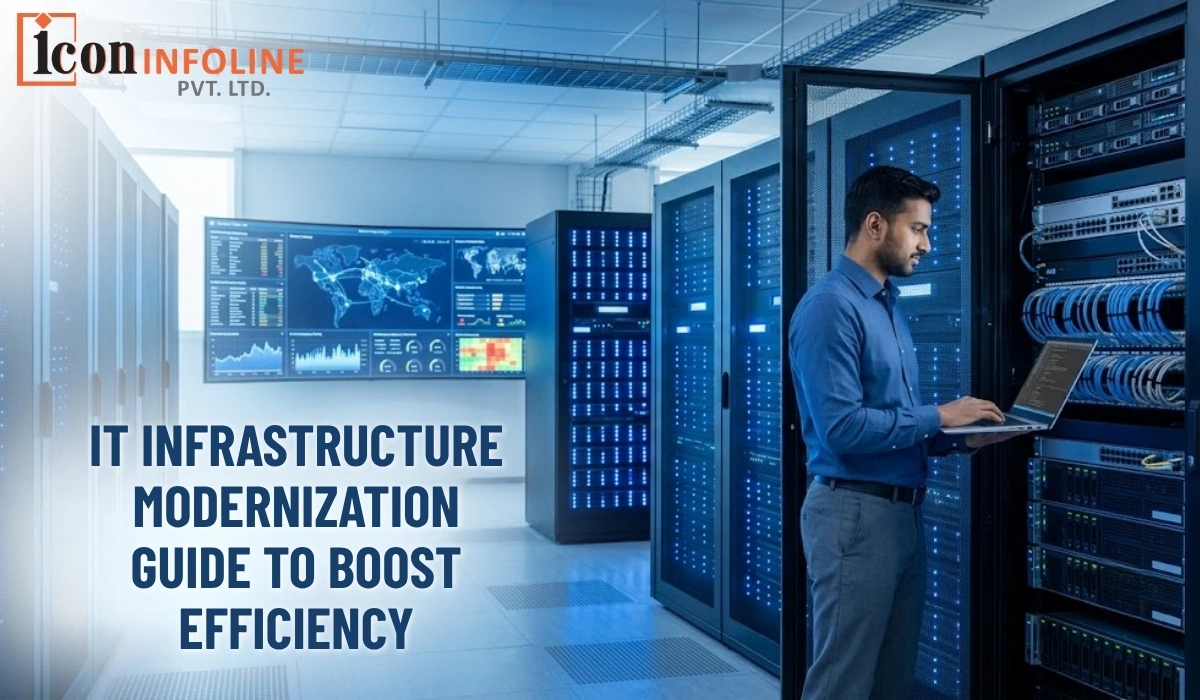
Complete Guide to IT Infrastructure Modernization
Digital transformation is now a must for businesses in India, not just a nice-to-have. To stay ahead, companies need a solid tech base that supports growth and innovation.
An IT Infrastructure Modernization Guide helps leaders link their tech with business goals. Updating old systems makes responses quicker and user experiences better. It also ensures data stays safe in today’s digital world.
Modernizing your systems does more than speed things up. It changes how you work and makes employees more productive. When tech works well, teams can solve problems creatively, not just fix old tech issues.
Key Takeaways
- Digital transformation is essential for maintaining a competitive edge in today’s market.
- A strong technology foundation is the primary driver for sustainable business growth.
- Updating legacy systems leads to faster response times and better user experiences.
- Enhanced security protocols are a critical benefit of upgrading foundational technology.
- Modern systems streamline internal processes and increase overall staff productivity.
Assessing Your Current IT Landscape
Understanding your IT setup is key to updating it. Before adding new tech, you need to see what’s working and what’s not. This helps find out which systems are useful and which are wasting resources.
Identifying Legacy System Bottlenecks
Old systems can hold you back from being agile. McKinsey (2024) says technical debt can take up to 40% of IT budgets. This leaves little for new ideas.
Signs of outdated systems include:
- Frequent system crashes during peak hours.
- Can’t work with modern cloud apps.
- High maintenance costs with no vendor support.
- Hard to fix security issues.
Evaluating Scalability and Performance Metrics
Checking how your setup handles growth is crucial. Performance metrics help show why upgrades are needed. If systems can’t handle demand, you’ll fall behind in the Indian market.
Here’s a table with important metrics to watch:
| Metric | Current Status | Target Goal |
|---|---|---|
| System Uptime | 98.5% | 99.99% |
| Latency | High (200ms) | Low ( |
| Resource Utilization | Over-provisioned | Optimized |
Looking at these metrics helps focus on what needs fixing first. This way, your IT updates will support your business goals.
Developing a Strategic Technology Modernization Plan
A good technology modernization plan makes IT challenges easier to handle. It starts with a deep discovery and scoring of workloads. This ensures each step is based on data, not guesses.
After discovery, teams work on architecture design and execution. This careful process avoids the problems of broken systems and out-of-control spending. It helps companies move to more agile and efficient ways of working.
Aligning IT Upgrades with Business Objectives
Good it modernization plans focus on business results, not just new hardware. Leaders should check their current apps to see which ones are most valuable. This makes sure tech supports the company’s main goals.
When picking which systems to update, consider these factors:
- How critical the workload is to the business.
- Indian market regulatory compliance needs.
- The amount of technical debt.
- How well the system can grow in the future.
Budgeting for Long-Term Infrastructure ROI
Planning the budget for IT upgrades needs a long-term view, not just initial costs. Companies often fail by ignoring the costs of keeping old systems running. A smart budget covers both the transition and the long-term savings.
Investing in flexible solutions helps avoid high costs from quick fixes. Good it modernization plans let companies spend more on new ideas. This boosts their return on investment and makes them more competitive.
Core IT Infrastructure Modernization Guide Strategies
Building a strong tech stack needs a clear plan and the right steps. A detailed IT Infrastructure Modernization Guide helps companies move to more flexible systems. This way, businesses can work better and stay fast.
Transitioning to Hybrid Cloud Environments
Hybrid multi-cloud strategies are great for balancing new ideas with control. They let companies keep important data safe while using public clouds for growth. This mix helps avoid being stuck with one provider.
It makes it easier to meet local data rules and stay quick to market changes in India. Using these strategies keeps your tech safe and fast.
Implementing Software-Defined Data Centers
Software-defined data centers change how companies manage their tech. They let teams manage everything from one place, making tasks easier. This makes IT work better across the whole company.
This model also makes using resources more efficient. IT can adjust power as needed, keeping your business competitive.
Enhancing Security and Compliance in Modernized Systems
Modernizing your IT infrastructure is key to protecting your business from new cyber threats. Old systems often miss out on important features like detailed logging, access control, and modern encryption. By following the latest IT best practices, companies can lower their risk and become more resilient.
Integrating Zero Trust Architecture
The zero-trust model says “never trust, always verify.” It makes sure every user and device is checked all the time, no matter where they are. This is a key part of modern IT best practices.
By not trusting anyone by default, companies can stop attackers from moving around in their systems. This detailed control is crucial for keeping data safe in today’s work environment. It focuses on protecting identities rather than just the network’s edges.
Meeting Data Sovereignty Requirements in India
In India, you must follow strict data protection laws and sovereignty rules. Modern systems help keep data local, as the law requires. Following IT best practices helps businesses stay compliant and grow their digital presence.
Companies need to use local cloud services and encrypted storage to meet these rules. This approach not only avoids fines but also gains trust from local customers. Here’s a look at how legacy and modern systems compare in security.
| Security Feature | Legacy Systems | Modernized Systems |
|---|---|---|
| Access Control | Static/Perimeter-based | Zero Trust/Identity-based |
| Data Encryption | Limited/Optional | End-to-End/Default |
| Compliance | Manual/Fragmented | Automated/Integrated |
| Threat Detection | Reactive/Delayed | Predictive/Real-time |
Optimizing Network Performance and Connectivity
As companies grow online, making their networks better is key. Following the best practices for IT infrastructure helps data move well between offices and data centers. This reduces delays and meets the needs of today’s business apps.
Leveraging SD-WAN for Distributed Operations
SD-WAN is a smart way to manage networks across many places. It lets companies control their network from one place, making it easier to manage. This tech sends data the fastest way possible, keeping apps running smoothly.
Teams spread out benefit a lot from SD-WAN. It makes sure important tasks like video calls and cloud work get the bandwidth they need. Using these best practices keeps work going smoothly, even when lots of data is moving.
Upgrading to High-Speed Fiber and 5G Integration
Today’s work needs fast internet, which fiber provides. Fiber is stable for quick data work and big cloud moves. Adding 5G makes the network even better for mobile and remote teams.
5G is great as a backup or main link where fiber is hard to get. Together, they make your network quick and ready for new business needs. Here’s how these techs compare:
| Technology | Primary Benefit | Best Use Case | Latency Level |
|---|---|---|---|
| SD-WAN | Traffic Optimization | Multi-site Management | Low |
| Fiber Optics | High Bandwidth | Data Centers | Very Low |
| 5G Integration | Mobility & Speed | Remote Operations | Low |
Adopting Automation and AI for IT Infrastructure Optimization
Today, companies are using smart automation to manage their digital worlds. They use intelligent tools to improve their IT setup and cut down on manual work. This lets teams work on important projects instead of doing the same tasks every day.
Automating Routine Maintenance Tasks
Manual work in server updates and management can lead to mistakes. Automating these tasks keeps everything consistent. It’s key for any good tech upgrade plan.
When engineers don’t have to do manual updates, they can focus on new ideas. This helps companies in India grow without needing more people. Automated systems make sure digital services run smoothly.
Using Predictive Analytics for System Health
Predictive analytics and automation cut down on IT team’s work and fix times. AI watches system patterns to spot problems before they happen. This keeps networks running smoothly.
Using these tools makes your IT setup stronger and more flexible. A solid tech plan uses data to avoid outages. These steps make sure your IT efforts pay off in the long run.
Overcoming Common Challenges During IT Infrastructure Upgrades
Upgrading old systems is a tough journey for Indian businesses. The aim is to grow by modernizing IT, but there are many hurdles. Companies need to be ready for these challenges to smoothly move to new digital setups.
Managing Data Migration Risks
Data migration is a key challenge in IT upgrades. The main risk is losing important data or messing up databases. To avoid this, teams should make a detailed plan before starting any updates.
This plan shows how different parts of the system work together. Knowing these connections helps prevent big problems when changes are made. Good planning keeps data safe during the whole upgrade process.
Ensuring Minimal Downtime During Transitions
Keeping business running is crucial for companies in competitive markets. Long outages can hurt sales and lose customer trust. To avoid this, companies should use experienced teams for updates.
It’s important to keep everyone informed during changes. Updates should happen when it’s least busy, and systems should be tested together. This way, businesses can adopt new tech without stopping work for users.
Conclusion
Updating your technology stack gives you a big edge in the Indian market. To succeed, see your systems as living things, not just tools. This change in view is key to digital success.
Focus on making your IT infrastructure better to stay quick and flexible. This means keeping your tech plans in line with your business goals. It’s a continuous effort.
Automation and planning are the keys to lasting success. By using these, you make your tech a powerful tool for new ideas.
Your dedication to improving IT infrastructure is crucial for growth. Always check your performance to keep up with trends. This way, you stay ahead in the digital world.
Share your stories of modernizing your tech to help others. Talk with your colleagues about how these changes affect your work. Your stories make the business world stronger and more united.
About Us
Icon Infoline Pvt. Ltd. is a trusted IT infrastructure and managed IT services company with over 24 years of industry experience. We help businesses modernize their IT environments through infrastructure upgrades, cloud solutions, data center services, cybersecurity, network management, backup and disaster recovery, and 24×7 IT support. As an authorized partner for leading technology brands, we deliver secure, scalable, and future-ready IT solutions that improve business performance and operational efficiency.
FAQs
1. What is IT infrastructure modernization?
IT infrastructure modernization is the process of upgrading outdated hardware, software, networks, and IT systems with modern technologies such as cloud computing, virtualization, automation, and enhanced cybersecurity to improve business performance and scalability.
2. Why is IT infrastructure modernization important for businesses?
Modernizing IT infrastructure improves system performance, strengthens cybersecurity, reduces downtime, lowers maintenance costs, supports business growth, and enables organizations to adopt new technologies more efficiently.
3. What are the key components of IT infrastructure modernization?
A complete IT modernization strategy typically includes server upgrades, cloud migration, network modernization, storage optimization, cybersecurity improvements, backup and disaster recovery, virtualization, and proactive IT monitoring.
4. How do businesses know it’s time to modernize their IT infrastructure?
Common signs include frequent system failures, slow network performance, outdated hardware, increasing maintenance costs, security vulnerabilities, limited scalability, and difficulty supporting remote or hybrid work environments.
5. Does Icon Infoline provide IT infrastructure modernization services?
Yes. Icon Infoline offers end-to-end IT infrastructure modernization services, including IT infrastructure upgrades, cloud solutions, network management, data center services, cybersecurity, backup and disaster recovery, and ongoing managed IT support for businesses of all sizes.

Recent Posts
Server Room Best Practices: Improving Reliability, Security and Performance

How to Create an Effective IT Budget for a Growing Business