Businesses are becoming increasingly dependent on digital technologies, cloud platforms, online transactions and connected IT infrastructure. While these technologies improve productivity and business operations, they also expose organisations to growing cybersecurity risks.
In 2027, businesses will need to prepare for more sophisticated cyber attacks involving artificial intelligence (AI), ransomware, phishing, data theft and network vulnerabilities. Even a single security incident can result in financial losses, operational disruptions, data breaches and damage to business reputation.
According to the World Economic Forum’s Global Cybersecurity Outlook 2026, cyber-enabled fraud, phishing, ransomware and AI vulnerabilities are among the major concerns for business leaders and cybersecurity professionals.
World Economic Forum+1
For businesses operating in Pune, PCMC and other growing commercial and industrial areas, having a strong cybersecurity strategy is becoming essential.
Understanding these Cyber Security Threats can help organisations identify potential risks and implement preventive measures before an attack occurs.
Key Takeaways
-
Cyber Security Threats can expose sensitive information, disrupt business operations and allow unauthorised access.
-
Vulnerabilities are system weaknesses that cybercriminals can exploit through targeted attacks.
-
Ransomware, phishing, malware and insider threats are major business security risks.
-
Businesses in Pune and PCMC must prioritise secure networks, accounts and payment systems.
-
Strong passwords, multifactor authentication, regular updates and secure backups help reduce cyber risks.
-
Organisations need effective cybersecurity strategies and incident response plans to protect their IT infrastructure.
A strong cybersecurity strategy starts with understanding potential threats and taking proactive steps to protect business data and systems.
What Are Cyber Security Threats and Why Do They Matter?
A cyber threat matters when it puts the confidentiality, integrity, or availability of information and services at risk. The CIA triad means confidentiality, integrity, and availability, the three security goals that cyberattacks can undermine.
A vulnerability is a weakness, such as an old software flaw or an exposed account. A threat is a condition or event that could cause harm, while a cyberattack is a deliberate attempt to compromise digital assets. These terms describe different parts of a security risk.
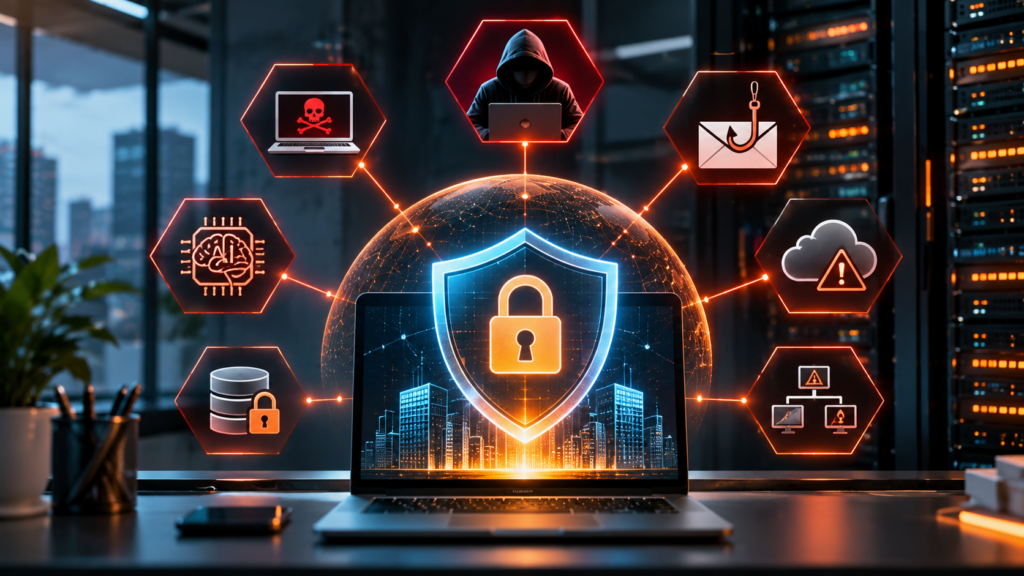
Four useful broad types of cyber threats are social engineering, malware, technical attacks, and insider or supply-chain threats. Social engineering tricks people, malware uses harmful code, technical attacks exploit system flaws, and trusted access can be misused.
These groups can overlap. A stolen password might enable a technical break-in, while a supplier’s compromised software can carry malicious code into a customer’s systems.
In 2025, CERT-In handled over 29.44 lakh cyber incidents and issued 1,530 alerts, 390 vulnerability notes, and 65 advisories. CERT-In’s national role includes responding to cyber incidents under Section 70B of the Information Technology Act, 2000.
These figures show why information security matters across public services, companies, and personal systems. Treat a weakness as a vulnerability, a harmful possibility as a threat, and a deliberate attempt as an attack.
Why Businesses in Pune and PCMC Need Strong Cyber Security
1. AI-Powered Cyber Attacks
Artificial intelligence is transforming business operations, but cybercriminals are also using AI to develop more sophisticated attacks.AI-powered tools can help attackers create convincing phishing emails, automate malicious activities and imitate legitimate communication.For example, employees may receive highly personalised emails that appear to come from company directors, vendors or financial departments.How businesses can protect themselves:Implement advanced email security solutions.Train employees to identify AI-generated scams.Use multi-factor authentication (MFA).Monitor unusual login and network activities.Apply AI-assisted threat detection where appropriate.
2. Ransomware Attacks
Ransomware Attacks remain one of the most damaging cybersecurity threats for businesses. In this type of attack, cybercriminals use malicious software to encrypt important business files and demand payment to restore access.Some attackers also steal sensitive information and threaten to publish it if the organisation refuses to pay.For manufacturing companies in Pune and PCMC, ransomware incidents can interrupt production, affect supply chains and create significant financial losses.How businesses can protect themselves:Maintain regular offline or immutable backups.Install reliable endpoint protection.Update operating systems and applications.Restrict unnecessary user permissions.Develop an incident response and recovery plan.
3. Phishing and Social Engineering Attacks
Phishing attacks involve fraudulent emails, messages or websites designed to trick employees into sharing confidential information or downloading malicious files.Social engineering attacks exploit human behaviour rather than relying only on technical vulnerabilities.Common examples include fake invoice emails, password reset requests, fraudulent payment instructions and impersonation of senior management.Prevention measures:Conduct regular employee awareness training.Enable multi-factor authentication.Use email filtering and anti-phishing protection.Verify payment instructions through trusted channels.Avoid opening suspicious attachments and links.
4. Data Breaches and Information Theft
A data breach occurs when unauthorised individuals gain access to confidential business information.Cybercriminals may target customer databases, employee records, financial documents, intellectual property and business communication systems.Data breaches can lead to legal complications, financial losses and reduced customer confidence.Prevention measures:Encrypt sensitive business information.Apply role-based access controls.Monitor database access.Conduct regular security audits.Maintain a data backup and recovery strategy.
5. Cloud Security Threats
Many businesses use cloud platforms for file storage, business applications, communication and remote working.However, incorrectly configured cloud environments, weak passwords and excessive access permissions can expose sensitive information.Businesses using cloud infrastructure should ensure that security controls are properly configured and continuously monitored.Prevention measures:Enable multi-factor authentication.Review cloud access permissions regularly.Encrypt sensitive information.Monitor cloud activity and suspicious logins.Maintain secure cloud backup solutions.
6. Insider Threats
Insider threats originate from individuals who already have authorised access to business systems.These incidents may involve employees, contractors or former staff members. They can be intentional or accidental.Examples include sharing confidential files, using weak passwords, accessing unauthorised information or accidentally exposing sensitive business data.Prevention measures:Follow the principle of least privilege.Monitor access to critical systems.Remove access immediately when employees leave.Conduct regular security awareness sessions.Implement clear data handling policies.
7. Distributed Denial-of-Service (DDoS) Attacks
A Distributed Denial-of-Service (DDoS) attack attempts to overwhelm a website, server or network with excessive traffic from multiple sources.This can make business websites, applications and online services unavailable to legitimate users.For organisations dependent on digital platforms, downtime can affect sales, customer support and business operations.Prevention measures:Use DDoS protection services.Implement network traffic monitoring.Configure firewalls and traffic filtering.Use scalable hosting infrastructure.Maintain a business continuity plan.
8. Supply Chain Cyber Attacks
Businesses often depend on third-party vendors, software providers, IT service companies and external partners.Attackers may target these suppliers to gain access to the systems or information of larger organisations.For example, compromised software updates or a vendor’s weak security controls can create vulnerabilities across multiple businesses.Prevention measures:Evaluate the cybersecurity practices of vendors.Monitor third-party access permissions.Use trusted software and service providers.Conduct regular supplier security assessments.Establish clear cybersecurity requirements in vendor agreements.
9. IoT and Network Security Threats
Internet of Things (IoT) devices, CCTV cameras, smart sensors, printers and connected industrial equipment are increasingly used in modern workplaces.If these devices are not properly secured, attackers may exploit them to access business networks.Manufacturing facilities in Bhosari MIDC, Chakan and other PCMC industrial areas should pay particular attention to securing connected equipment and operational networks.Prevention measures:Change default device passwords.Update device firmware regularly.Separate IoT devices from critical business networks.Monitor network traffic.
Conclusion
Cyber security threats continue to evolve as businesses adopt new technologies and digital infrastructure. From ransomware and phishing to AI-powered attacks and cloud vulnerabilities, organisations must remain proactive in protecting their systems and sensitive information.By implementing strong security practices, conducting regular assessments, training employees and maintaining secure backups, businesses can reduce cybersecurity risks and improve their overall resilience.For organisations looking to strengthen their IT security infrastructure, explore our Enterprise IT Security Services to understand available security solutions.
1. What are the biggest cyber security threats businesses may face in 2027?
The major cyber security threats businesses may face in 2027 include AI-powered cyber attacks, ransomware, phishing, data breaches, cloud security vulnerabilities, insider threats, DDoS attacks, supply chain attacks, IoT security risks and zero-day vulnerabilities. Understanding these threats helps organisations prepare effective security measures.
2. Why is cyber security important for businesses in Pune?
Businesses in Pune rely on digital infrastructure, cloud applications, networks and customer databases to manage their daily operations. Cyber security helps protect sensitive business information, prevent unauthorised access, minimise operational disruptions and maintain customer trust.
3. How can small businesses in PCMC protect themselves from cyber attacks?
Small businesses in PCMC can reduce cyber risks by using strong passwords, enabling multi-factor authentication, installing reliable antivirus software, maintaining regular data backups, updating applications and providing cybersecurity awareness training to employees.
4. What is a ransomware attack and how does it affect businesses?
A ransomware attack is a type of cyber attack in which malicious software encrypts business files or systems and demands payment to restore access. It can cause financial losses, operational downtime, data theft and damage to business reputation. Regular secure backups and updated security software can help reduce its impact.
5. How often should businesses conduct cybersecurity assessments?
Businesses should conduct cybersecurity assessments at least once a year and whenever significant changes are made to their IT infrastructure. Organisations handling sensitive information or operating critical systems should also perform regular vulnerability checks and continuous security monitoring.
6. What are the benefits of following cyber security best practices?
Following cyber security best practices helps businesses protect confidential information, reduce the risk of cyber attacks, prevent unauthorised access, maintain system availability and improve employee awareness. Practices such as regular software updates, secure backups and access control contribute to stronger overall security.
7. How can businesses improve their IT infrastructure security?
Businesses can improve IT infrastructure security by regularly updating software, securing network connections, implementing endpoint protection, monitoring suspicious activities, restricting user access and maintaining secure data backups. Employee awareness training and periodic security reviews also help identify potential risks before they become serious problems.