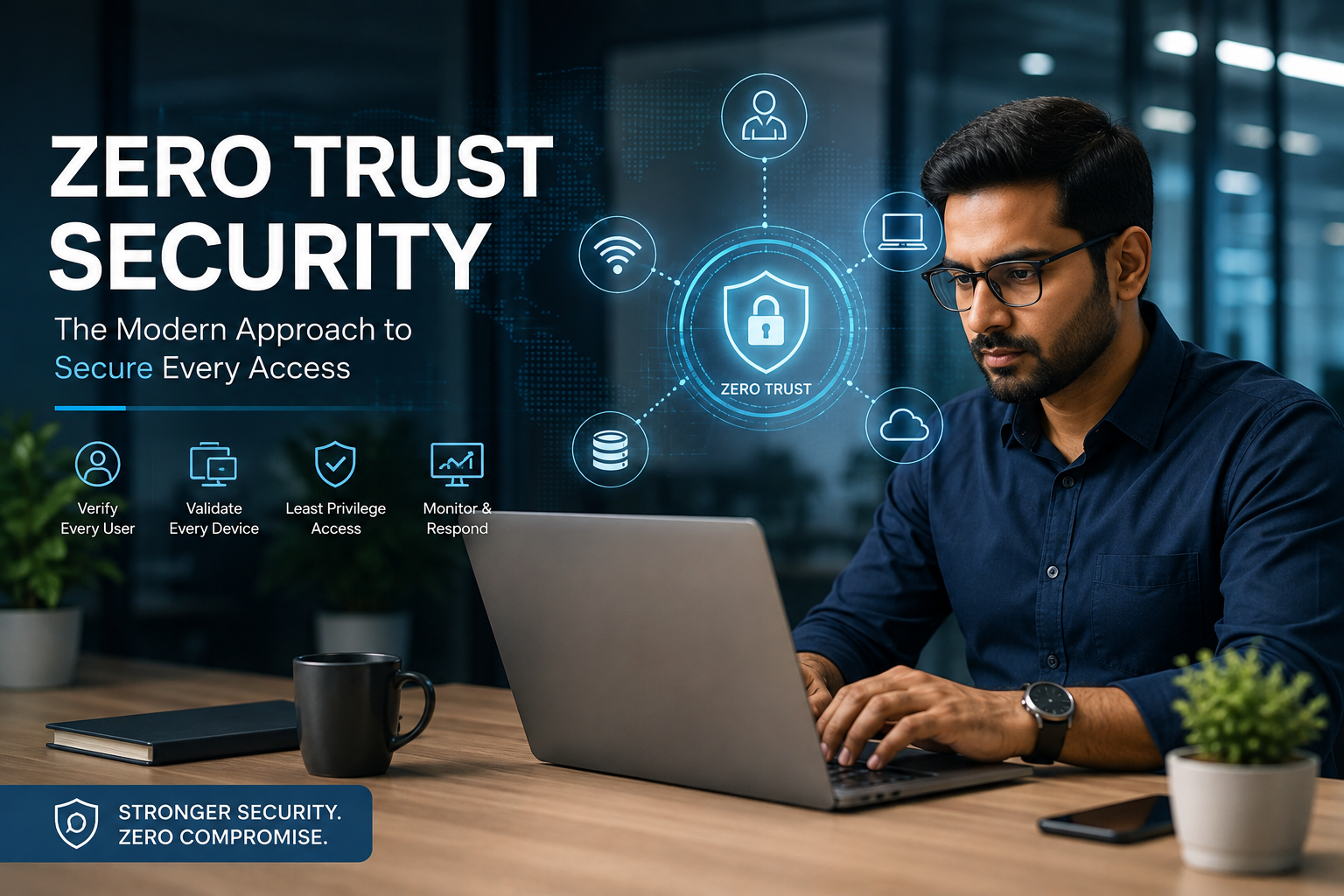
Zero Trust Security: Why Every Business Needs It
The digital world in India is changing fast. Companies are moving to cloud technology and remote work. But, old defenses can’t stop today’s cyber threats.
It’s time for a new approach. A mandatory step for organizational resilience is to verify every access request. This way, firms can lower risks and keep business running smoothly. It’s a proactive way to protect sensitive data from global attacks.
By adopting this model, your team can stay ahead in a fast-changing market. It’s time to leave old security methods behind. Protecting your digital world is a crucial investment for today.
Key Takeaways
- Traditional network perimeters are no longer sufficient to stop modern cyber threats.
- Indian businesses must adopt modern frameworks to ensure long-term operational resilience.
- Verifying every access request is essential for effective risk mitigation.
- Shifting paradigms helps protect sensitive corporate data from global attackers.
- Modernizing your defense strategy is a critical requirement for business continuity.
The Evolving Cybersecurity Landscape in India
India’s fast move to digital has made the security scene complex. Old network security methods can’t keep up with new threats. Companies must now face a digital world that’s both unpredictable and connected.
Rising Sophistication of Cyber Threats
Cybercriminals are getting smarter, using new tools to get past old defenses. They use automated tools and AI to find weak spots in systems. To stay safe, businesses need to be ahead of these threats.
India faces many cyber dangers, including:
- Advanced persistent threats targeting financial data.
- Sophisticated phishing campaigns designed to harvest credentials.
- Ransomware attacks that paralyze critical operational infrastructure.
“The speed at which digital threats evolve in the Indian market necessitates a fundamental shift in how we perceive and manage organizational risk.”
The Shift Toward Remote and Hybrid Work Models
Remote and hybrid work has changed how we see security. Employees work from many places, making it harder to keep data safe. IT teams face a big challenge in keeping network security strong.
Clouds are key to modern work, but they open new risks. When staff use unsecured home networks, data risks grow. Leaders must focus on cybersecurity for business to keep data safe, even when working remotely.
Understanding the Core Principles of Zero Trust Security
Learning about Zero Trust Security is the first step towards a new security approach. Companies are leaving behind old ways that relied on physical walls to keep data safe. This change is crucial for businesses in today’s digital world.
Moving Beyond Perimeter-Based Defense
Old security methods were like a castle-and-moat setup. They thought everything inside the network was safe. But, once an attacker got in, they could move around easily.
Now, companies know that the network edge has disappeared. This is because of cloud use and mobile work. By not assuming safety based on location, companies can better protect their data. They treat every connection request as a risk, whether it’s from inside or outside the office. Strong perimeter-less defense means security follows the data, not the network cable.
The Never Trust, Always Verify Philosophy
The main idea of this approach is to never trust and always check every request. Every user, device, and app must be thoroughly checked before accessing resources. This rule applies whether someone is in the office or working from home.
Zero Trust Security means having detailed control over who sees what information. By checking every interaction, companies lower the risk of unauthorized access. This way, security is always on the lookout, not just watching.
Continuous Monitoring and Validation
In a secure environment, access isn’t just a one-time thing. Systems must keep checking to make sure the user’s situation hasn’t changed. If a device gets hacked or a user acts strangely, access can be taken away right away.
Real-time checks help companies stay ahead of threats. This ongoing check keeps the environment safe as long as a user is active. The table below shows how this new approach differs from old methods.
| Feature | Traditional Security | Zero Trust Security |
|---|---|---|
| Trust Assumption | Implicit trust inside network | Zero implicit trust |
| Access Control | Broad, perimeter-based | Granular, identity-based |
| Verification | One-time at entry | Continuous and dynamic |
| Visibility | Limited to network edge | Full end-to-end visibility |
Key Components of a Robust Zero Trust Architecture
Creating a strong zero trust architecture needs a mix of technical layers working together. It moves away from old perimeter defenses. This makes a safer space against new threats. Every interaction is checked, no matter where it comes from.
Identity and Access Management (IAM) Integration
At the core is Identity and Access Management (IAM). It acts as the main guard for digital interactions in companies. With multi-factor authentication and strict checks, only the right people can get into important systems.
Micro-segmentation of Network Resources
Good network security means breaking the network into small, safe areas. Micro-segmentation stops attackers if they get into one area. It keeps them from getting to key data or secrets.
- Granular control: Set access rules based on user roles.
- Reduced blast radius: Keep a breach small by limiting its spread.
- Improved visibility: Watch traffic to spot odd patterns.
Endpoint Security and Device Compliance
Protecting the network starts with the devices that connect to it. Endpoint security keeps an eye on all devices, from laptops to mobiles. It checks for weaknesses and updates software.
Ensuring Device Health Before Access
The system checks a device’s health before letting it in. If a device is not secure, like missing updates or malware, it’s blocked. This stops bad devices from letting threats in, keeping the zero trust architecture safe.
The Role of Zero Trust Network Access (ZTNA) in Modern Business
Protecting corporate assets in today’s work environment needs a big change. Many companies are switching to zero trust network access (ztna) to update their network access methods. This change is key for strong cybersecurity for business against digital threats.
Replacing Traditional VPNs with ZTNA
Old Virtual Private Networks (VPNs) give users full access to the network once they log in. This “all-or-nothing” method is risky if a device gets hacked. Zero trust network access (ztna) checks each connection request one by one.
ZTNA is like a secure gate, unlike VPNs which are like an open door. It makes sure users only get to the resources they need. This is a key part of modern cybersecurity for business.
Granular Access Control for Cloud Applications
Today’s businesses use cloud tools to keep teams working well. With granular access control, IT can set up permissions based on user roles and context. This keeps sensitive data safe, even when accessed from outside.
By using the principle of least privilege, companies stop unauthorized access. Employees can easily get to the apps they need without risking the whole system. This mix of security and ease is what a strong digital setup looks like.
Reducing the Attack Surface for Remote Employees
Remote and hybrid work models have made it tough to watch every endpoint. ZTNA reduces the attack surface by keeping internal apps hidden from the internet. This makes it tough for hackers to find or hit private corporate resources.
With ZTNA, every session is checked continuously, keeping it safe all day. By limiting exposure, businesses can lower the risks of remote access. This is crucial for keeping systems safe in a fast-changing threat world.
Overcoming Implementation Challenges for Indian Enterprises
Switching to a new security system is a big step for companies in India. The benefits are clear, but many face real challenges. Moving to a zero trust architecture needs careful planning and a step-by-step approach to keep things running smoothly.
Addressing Legacy Infrastructure Limitations
Many Indian companies use old hardware and software that don’t meet today’s security needs. Adding a zero trust network access (ztna) model to these systems can be tough. IT teams must decide whether to update, replace, or secure these systems to keep them visible.
The goal is to connect the old with the new without stopping business. Focusing on high-risk areas first helps modernize infrastructure bit by bit. This approach reduces downtime and strengthens security over time.
Managing Cultural Shifts in IT Security Teams
Technology is just one part; people are also key. Changing from a reactive to a proactive security mindset is a big change. Security teams need to learn to always verify, not just assume internal traffic is safe.
Training and clear communication are crucial for staff to adapt. When employees understand the reasons behind the change, they can help with the security shift. This cultural shift is often what makes a project succeed or fail.
Budgeting for Long-Term Security Transformation
Security is an ongoing effort, not a one-time fix. Indian businesses should see their investment in zero trust architecture as a long-term investment in safety. Budgeting should cover not just software costs, but also maintenance, training, and updates.
Seeing security as a way to improve business can help get support from stakeholders. A smart budget keeps the organization safe from new threats while keeping costs under control. The table below shows where to focus budgeting during this transition.
| Investment Area | Primary Focus | Expected Outcome |
|---|---|---|
| Infrastructure Upgrades | Legacy system integration | Reduced technical debt |
| Staff Training | Cultural shift and skill building | Proactive security operations |
| ZTNA Deployment | Granular access control | Minimized attack surface |
| Continuous Monitoring | Real-time threat detection | Improved incident response |
Strategic Benefits of Adopting a Zero Trust Framework
A good security strategy changes how businesses handle risks and protect their key assets. It moves away from old models to build a strong base for growth. Choosing Zero Trust Security is now a key business move for today’s companies.
Enhanced Data Protection and Regulatory Compliance
Today’s businesses face many data privacy laws, like India’s Digital Personal Data Protection (DPDP) Act. A strong framework keeps data safe with strict controls and encryption. This makes audits easier and helps companies follow regulatory compliance well.
Improved Visibility into Network Traffic
Good cybersecurity for business means seeing what’s happening on the network. Continuous monitoring gives teams insight into traffic and user actions. This helps spot odd behavior fast, stopping big problems before they start.
“Security is not a product, but a process. By shifting to a model that assumes no implicit trust, organizations can create a culture where every action is validated and every asset is protected.”
Mitigating the Impact of Insider Threats
Internal threats are often the biggest challenge for security. Micro-segmentation limits how far a breach can spread. This keeps the damage from getting worse.
| Feature | Traditional Security | Zero Trust Framework |
|---|---|---|
| Access Control | Perimeter-based | Identity-based |
| Visibility | Limited | Comprehensive |
| Risk Mitigation | Reactive | Proactive |
| Compliance | Complex | Streamlined |
In the end, Zero Trust Security leads to a safer future. By using these advanced methods, companies can boost their cybersecurity for business. This creates a culture of safety that protects their reputation and profits.
Conclusion
Digital transformation changes how we protect our most valuable assets. Old perimeter defenses can’t stop today’s attacks. A zero trust architecture is key to fighting modern threats.
Network security needs a proactive approach. Every connection is seen as a risk. Zero trust network access (ztna) helps by checking every user and device.
This way, sensitive data stays safe, no matter where people work or what apps they use. Leaders should see these security steps as vital for growth. A strong security stance builds trust and keeps operations running smoothly.
Begin the shift now to protect your business from the ever-changing cyber world.
About Icon Infoline
Icon Infoline is a trusted IT solutions and cybersecurity company specializing in Zero Trust Security, Network Security, cloud solutions, managed IT services, and enterprise cybersecurity. We help businesses protect their digital infrastructure with advanced security strategies that prevent unauthorized access, secure sensitive data, and ensure business continuity. Our experienced team delivers customized cybersecurity solutions that strengthen IT environments, improve compliance, and safeguard organizations against evolving cyber threats across Pune, PCMC, and Maharashtra.
FAQ
Q: Why is Zero Trust Security essential for businesses in Pune and PCMC?
Q: How does Zero Trust Architecture improve traditional VPN security for businesses in Pune and PCMC?
Q: What are the core pillars of the “never trust, always verify” philosophy?
Q: What role does micro-segmentation play in cybersecurity for business?
Q: How can Indian enterprises overcome the challenges of legacy infrastructure during implementation?
Q: Does adopting a zero trust framework help with regulatory compliance?

Recent Posts

Server Room Best Practices: Improving Reliability, Security and Performance

How to Create an Effective IT Budget for a Growing Business